LiPo Charging, Storage and Safety
A LiPo pack that is treated right lasts hundreds of cycles. One that is treated badly swells, loses power and, at worst, can catch fire. Most of the rules are simple, and they cover three moments: charging, flying and the time between flights.
Charging
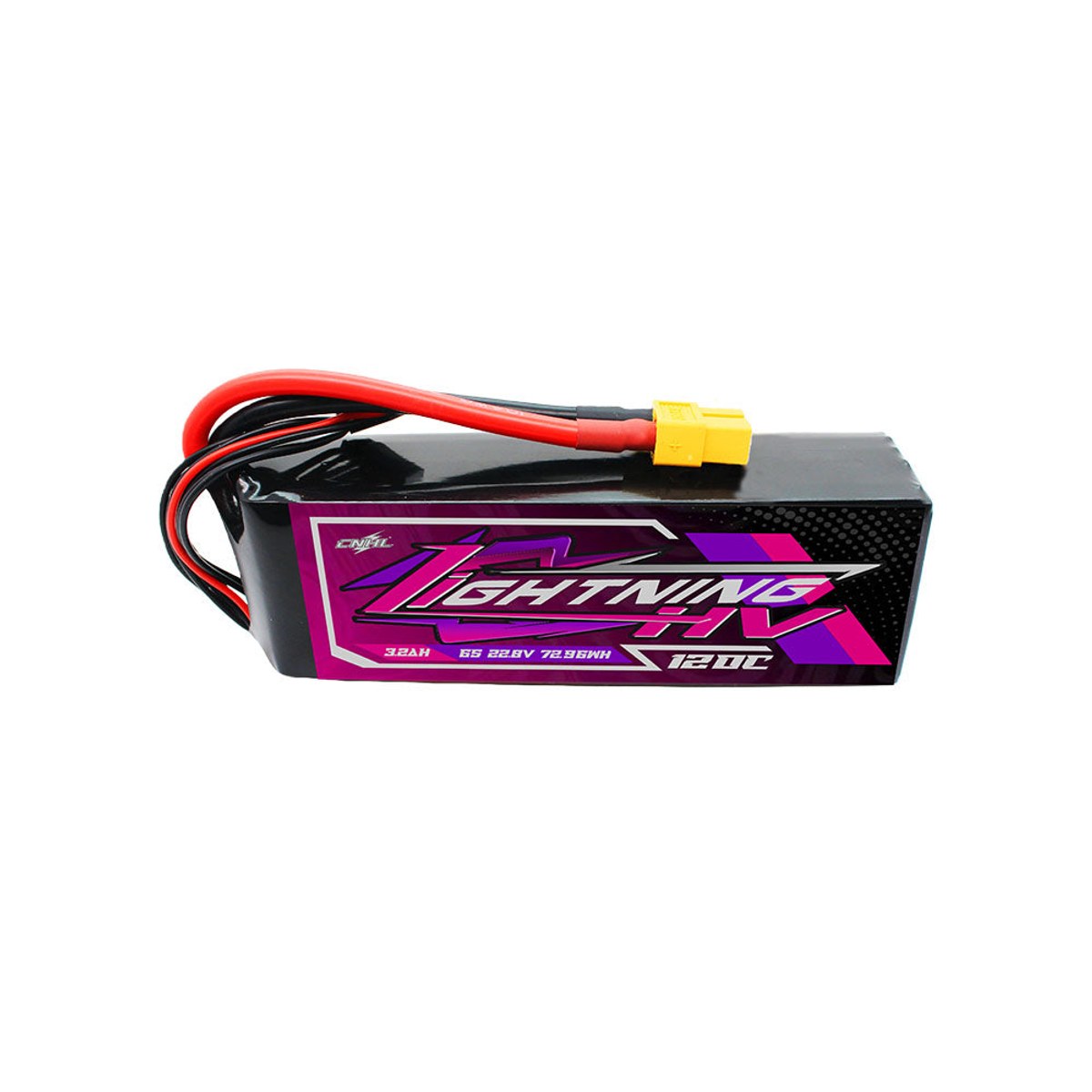
Charge only with a balance charger that is also connected to the pack's balance lead, so every cell reaches exactly 4.20 V. LiHV packs, which are labelled as such, charge to 4.35 V per cell, and only they may be charged in HV mode.
A safe charge rate is 1C: a 1300 mAh pack charges at 1.3 A. Charge on a non-flammable surface, ideally in a fireproof bag or box, and never leave a charging pack unattended. If one cell differs from the others by more than about a tenth of a volt after charging, the pack is starting to wear out.
In flight: when to land
Don't fly a pack to empty. A good rule of thumb is to land when the resting voltage is about 3.5 to 3.6 V per cell, and not to let it drop below 3.3 V per cell under load. Set a voltage warning in the OSD: Betaflight's default warning is 3.5 V per cell.
Li-ion packs are built to go lower, usually to about 3.0 V per cell under load, so they get different thresholds. Either way, the mAh-consumed reading in the OSD is more reliable than voltage, because voltage sags and recovers with throttle.
Storage between flights
A pack that won't fly in the next day or two should be stored at storage voltage: 3.80 to 3.85 V per cell. Most chargers have a Storage mode that brings a pack there from full or from empty. A full pack left for days ages quickly.
Store packs somewhere cool and dry, in a fireproof box or bag. In a hot summer don't leave packs in a car: the temperature inside a closed car gets very high and damages them. In winter it's the other way round: a cold pack delivers less, so warm it up before flying.
When to retire a pack
A pack that has swollen, been crushed or cut, or gets very hot from a normal flight should be taken out of service. After a hard crash, inspect the pack and leave it outside on a safe surface for half an hour before putting it in a bag or bringing it indoors.
Before disposal, discharge the pack to a low voltage using the charger's discharge mode, cover the contacts with insulation, and take it to a battery collection point. Never put lithium batteries in the household bin.
Flying abroad with batteries
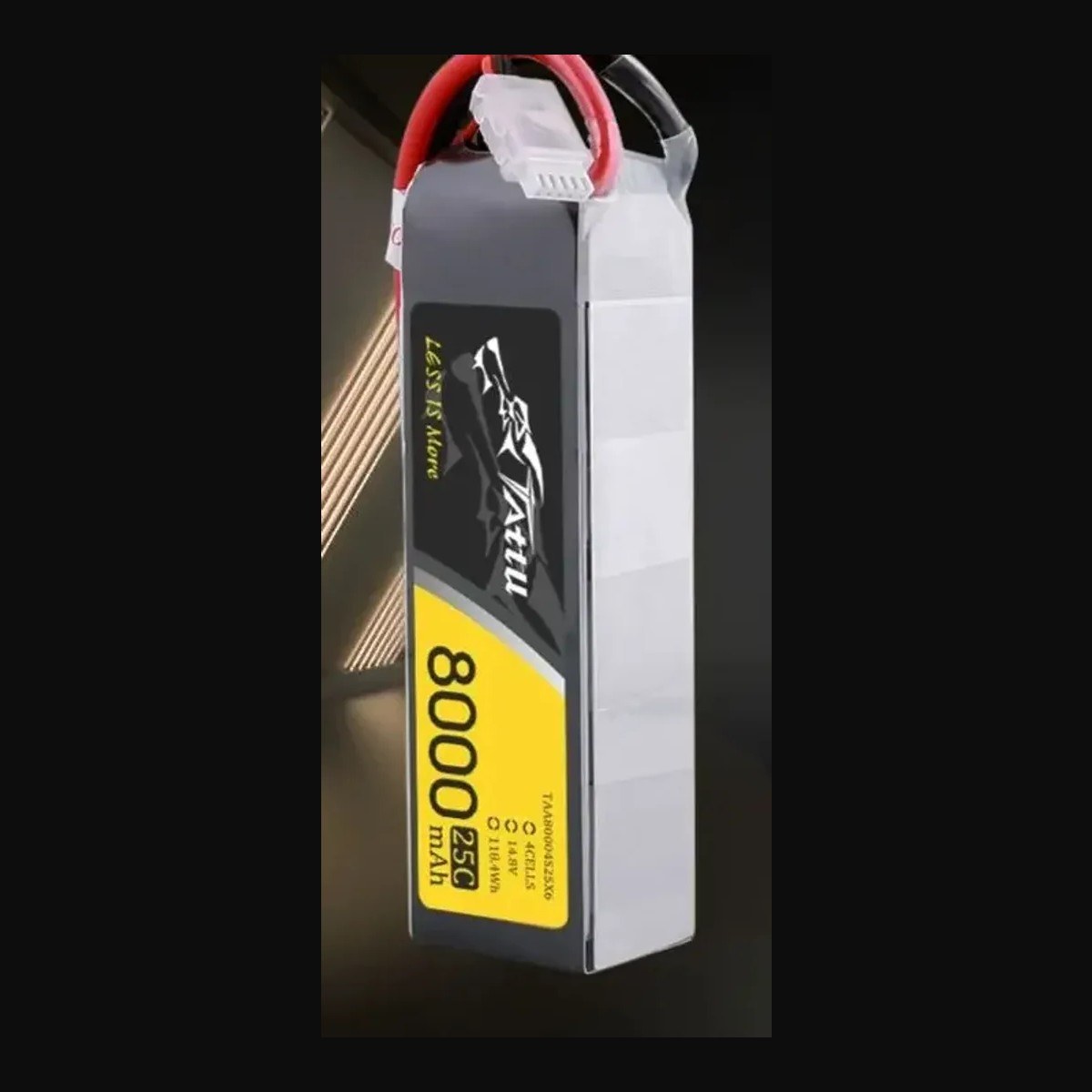
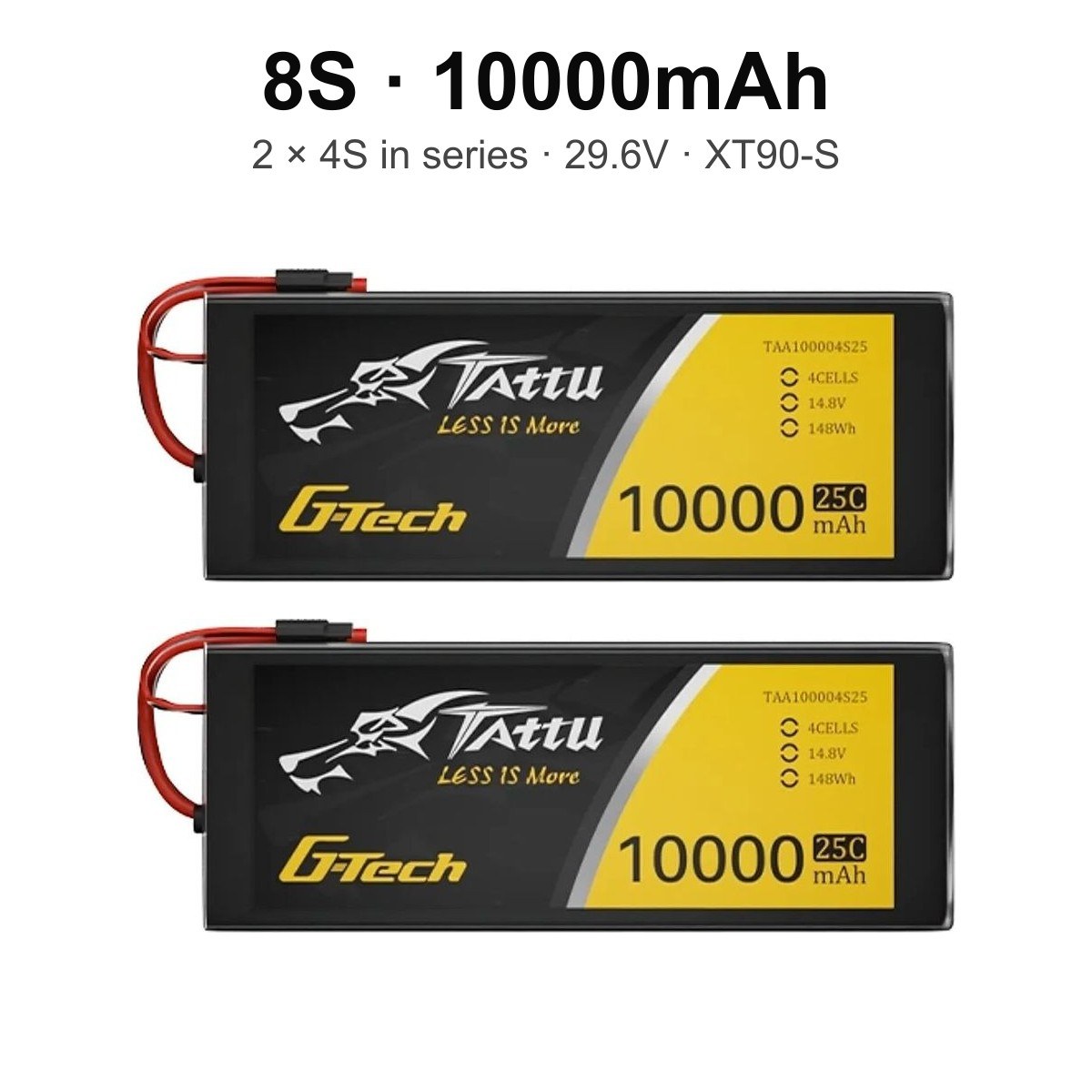
On commercial flights, spare lithium batteries go in hand luggage only, never in checked bags. The limit is measured in watt-hours: nominal voltage times capacity in amp-hours. A 6S 1300 mAh pack is 22.2 × 1.3, about 29 Wh.
- Up to 100 Wh per pack: allowed in hand luggage
- 100 to 160 Wh: only with the airline's approval, usually up to two packs
- Over 160 Wh: not allowed on passenger flights
- Cover the contacts, and travel with packs at storage voltage. Check your airline's rules in advance
How long will your drone fly?
Pick a motor, prop and battery, and get an estimate of weight, current, flight time and thrust-to-weight ratio.
Open the flight time calculator →