How to Choose an FPV Battery: Cells, Capacity and C Rating
The battery is the heaviest part of an FPV drone, and it sets both the power and the flight time. A good choice starts with the cell count, moves on to capacity, and ends with checking that the pack can deliver the current your drone needs.
Start with the cell count (S)
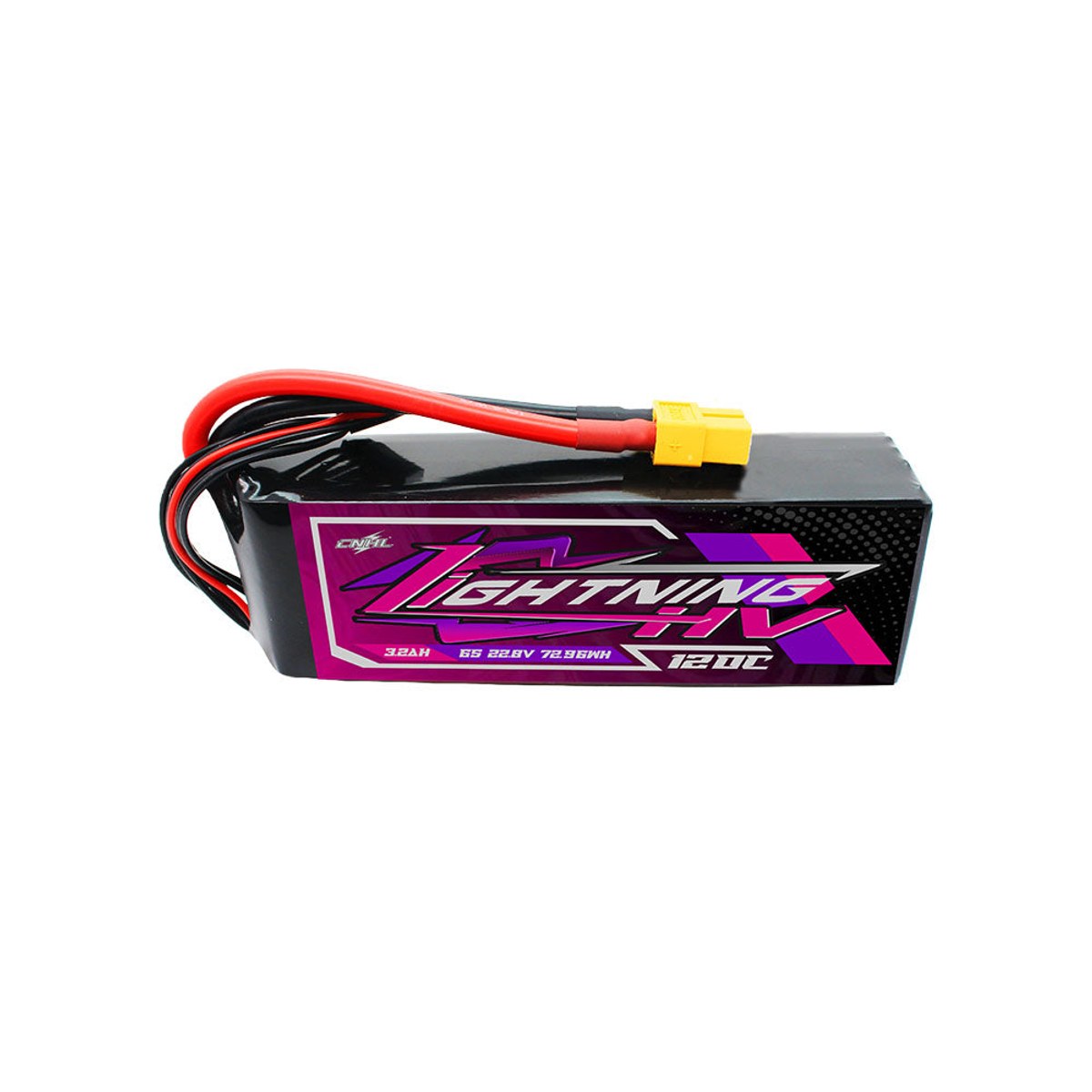
The number before the S is the number of cells in series, and it sets the voltage. A full lithium cell is 4.2 V, so a full 4S pack is 16.8 V and a full 6S pack is 25.2 V. Choose the cell count to suit the motors: a high-KV motor is built for low voltage, and a low-KV motor is built for high voltage.
Before plugging in a pack, check that the flight controller, ESC, camera and video transmitter are all rated for its voltage. Most 5-inch and larger drones now run on 6S, because a higher voltage gives the same power at a lower current, and less current means less heat in the wiring and the ESC.
Capacity by drone size
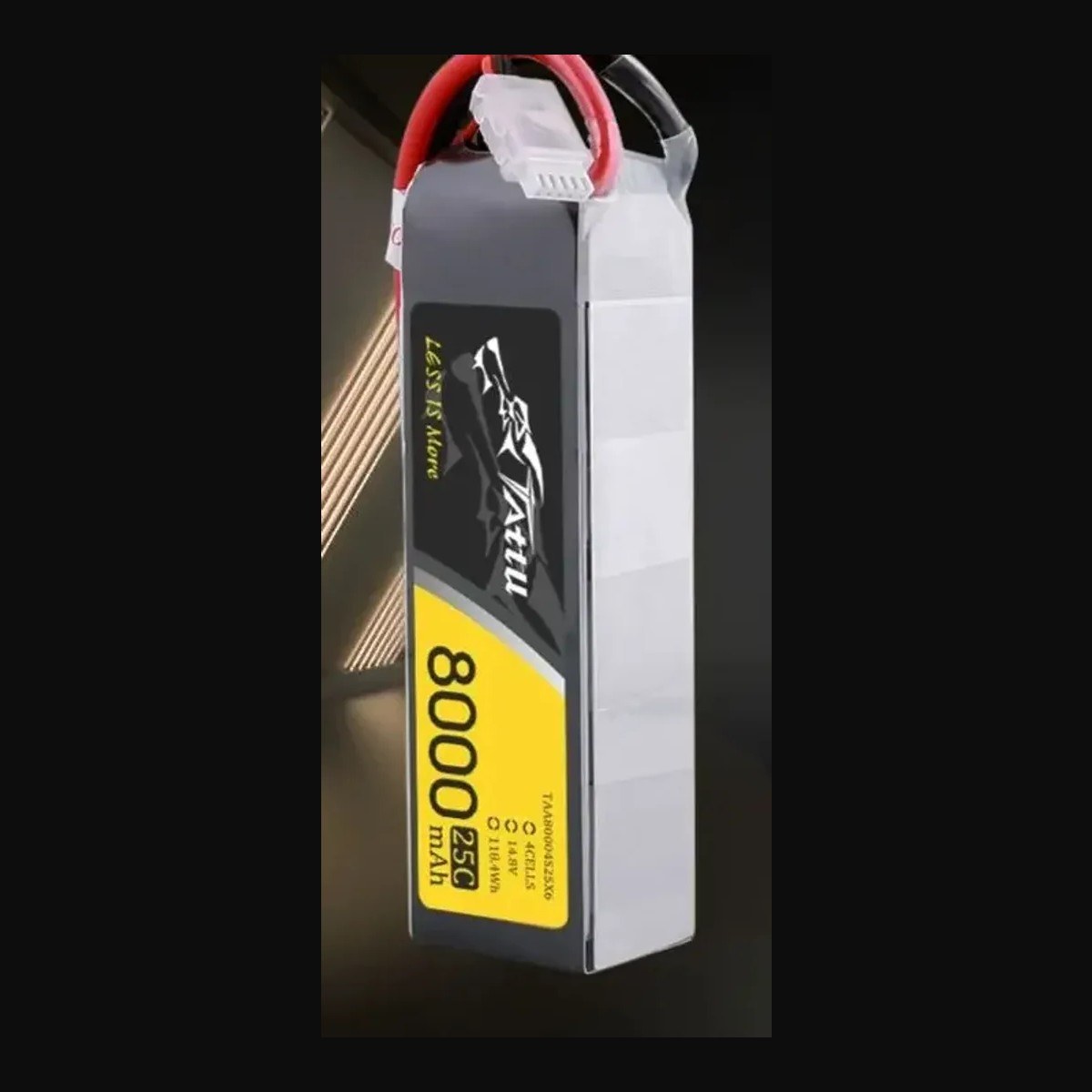
Capacity, in mAh, is the amount of energy in the pack. More capacity gives more flight time but also more weight, and past a certain point the extra capacity barely extends the flight. These are the common sizes:
- 65–75 mm whoops: 1S, 300 to 550 mAh
- 3-inch: 4S 650 to 850 mAh, or a small 6S pack
- 5-inch freestyle: 6S 1050 to 1300 mAh
- 7-inch long range: 6S LiPo 1800 to 2200 mAh, or 6S Li-ion for long cruising flights
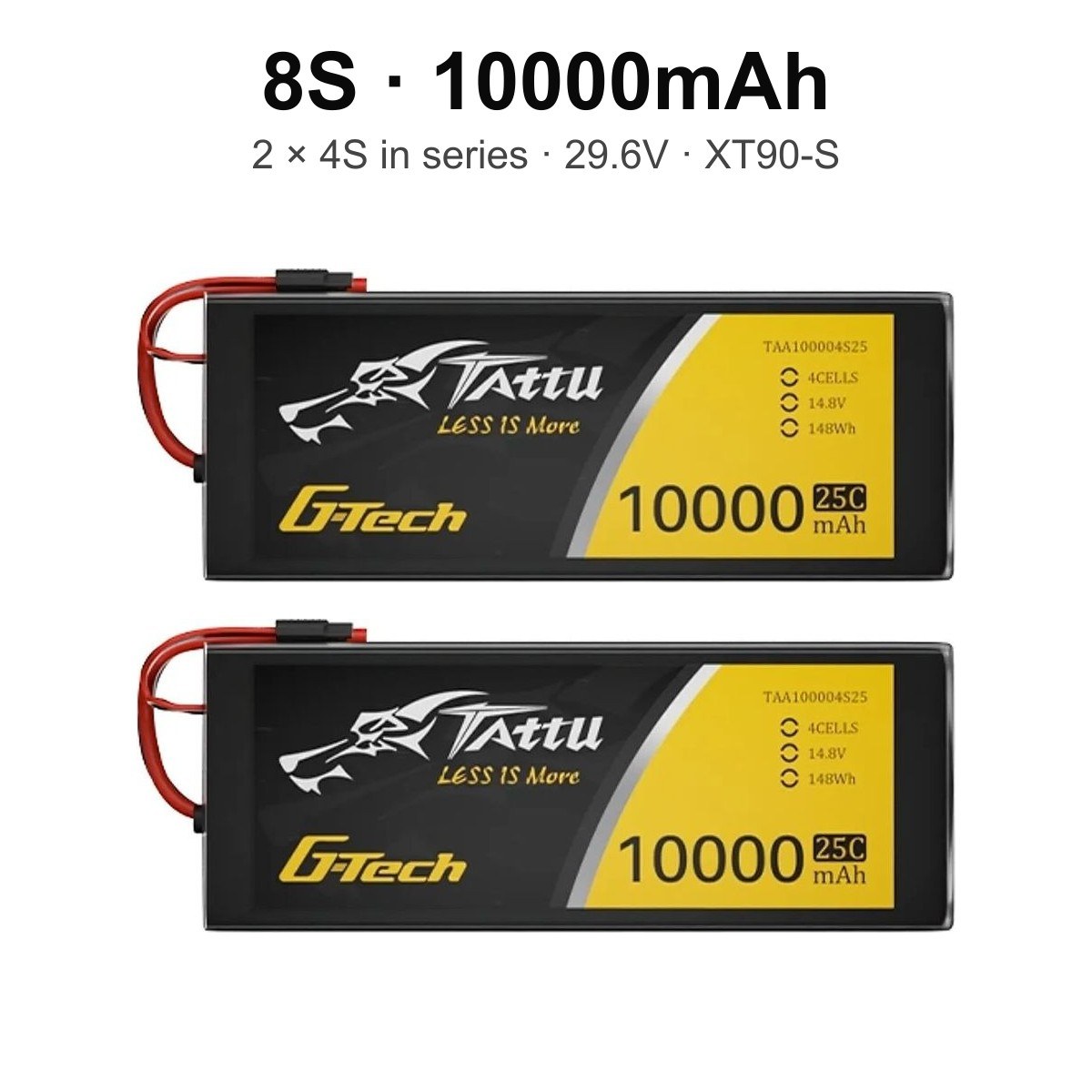
- 10-inch and up: 6S LiPo 4000–5000 mAh, or large Li-ion packs (6S2P and up)
What the C rating really means
The C rating describes how much current the pack can deliver: capacity in amp-hours times C. A 1300 mAh pack rated 100C should deliver 130 A on paper. In practice label figures are optimistic, so choose a pack whose real continuous current is well above your drone's peak draw.
Signs that a pack is too weak for the drone: the voltage drops hard at full throttle, the pack comes back very hot from a normal flight, and the drone feels tired halfway through. In that case you need a better pack or a larger capacity.
Weight matters more than you think
On a 5-inch drone the battery is usually a third or more of the all-up weight. Every extra gram needs more thrust to hover, so an oversized pack can shorten the flight instead of extending it, and it will certainly hurt how the drone flies.
Li-ion packs store more energy per gram than LiPo, but deliver less peak current. That makes them suited to calm cruising and long range, while LiPo suits freestyle and racing. The differences are explained in the LiPo vs Li-ion guide.
Connector, lead and the calculator
The connector must suit the current: XT30 for small drones up to about 3 inches, XT60 for most 5- to 7-inch drones, and XT90 for heavy builds. Pick one connector for your whole fleet and keep adapters for the charger.
To see in advance how a given pack will affect your drone, enter your parts into the FPV.BASE flight time and efficiency calculator: it estimates weight, hover current, flight time and thrust-to-weight ratio. It is an estimate, so after a few flights compare it with the consumption shown in your OSD.
How long will your drone fly?
Pick a motor, prop and battery, and get an estimate of weight, current, flight time and thrust-to-weight ratio.
Open the flight time calculator →