Fiber-Optic FPV: How It Works and What You Need
A fiber-optic FPV drone carries its video and control link down a hair-thin glass fiber that unspools behind it, instead of over radio. It is a different way to fly, with real strengths and real limits.
How it works
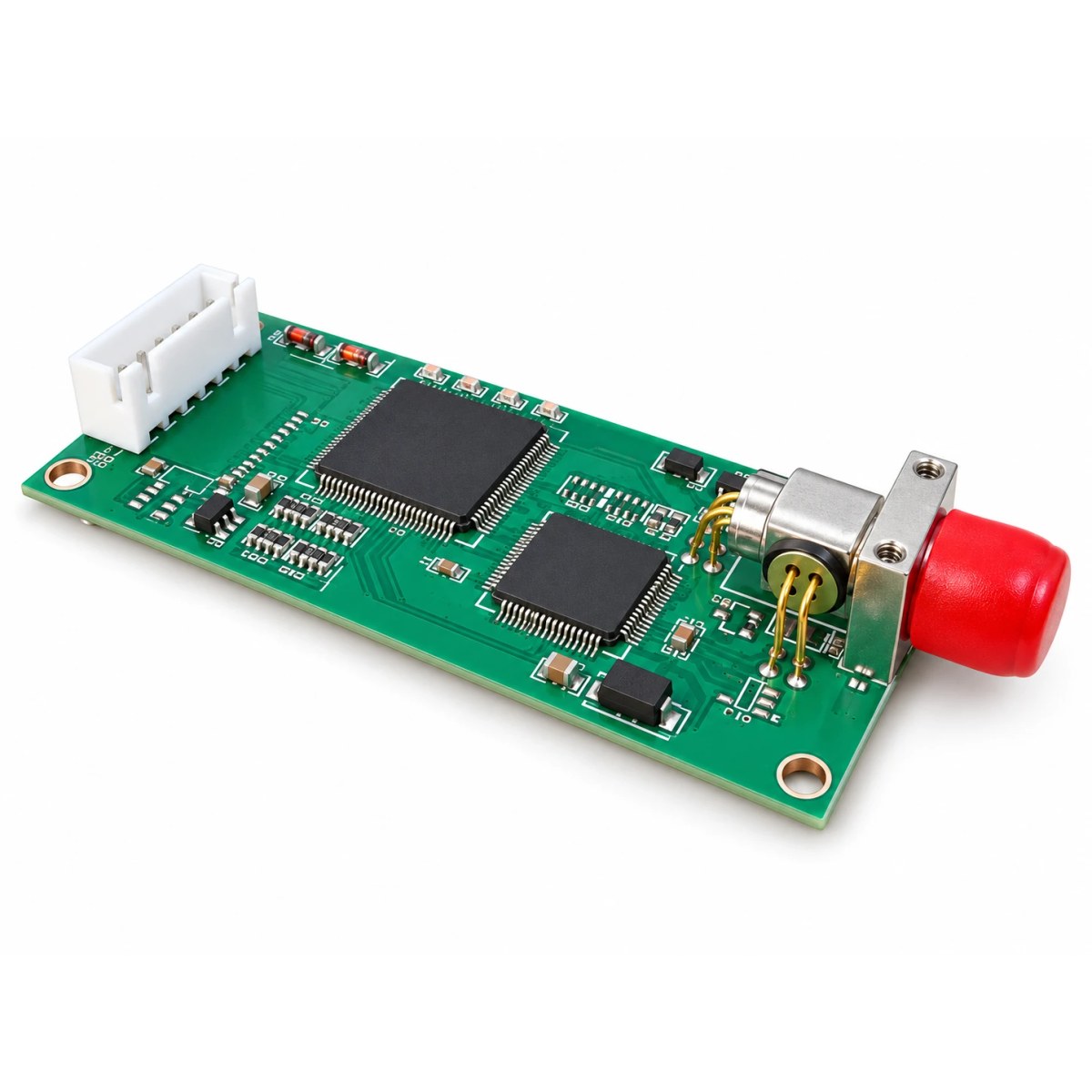
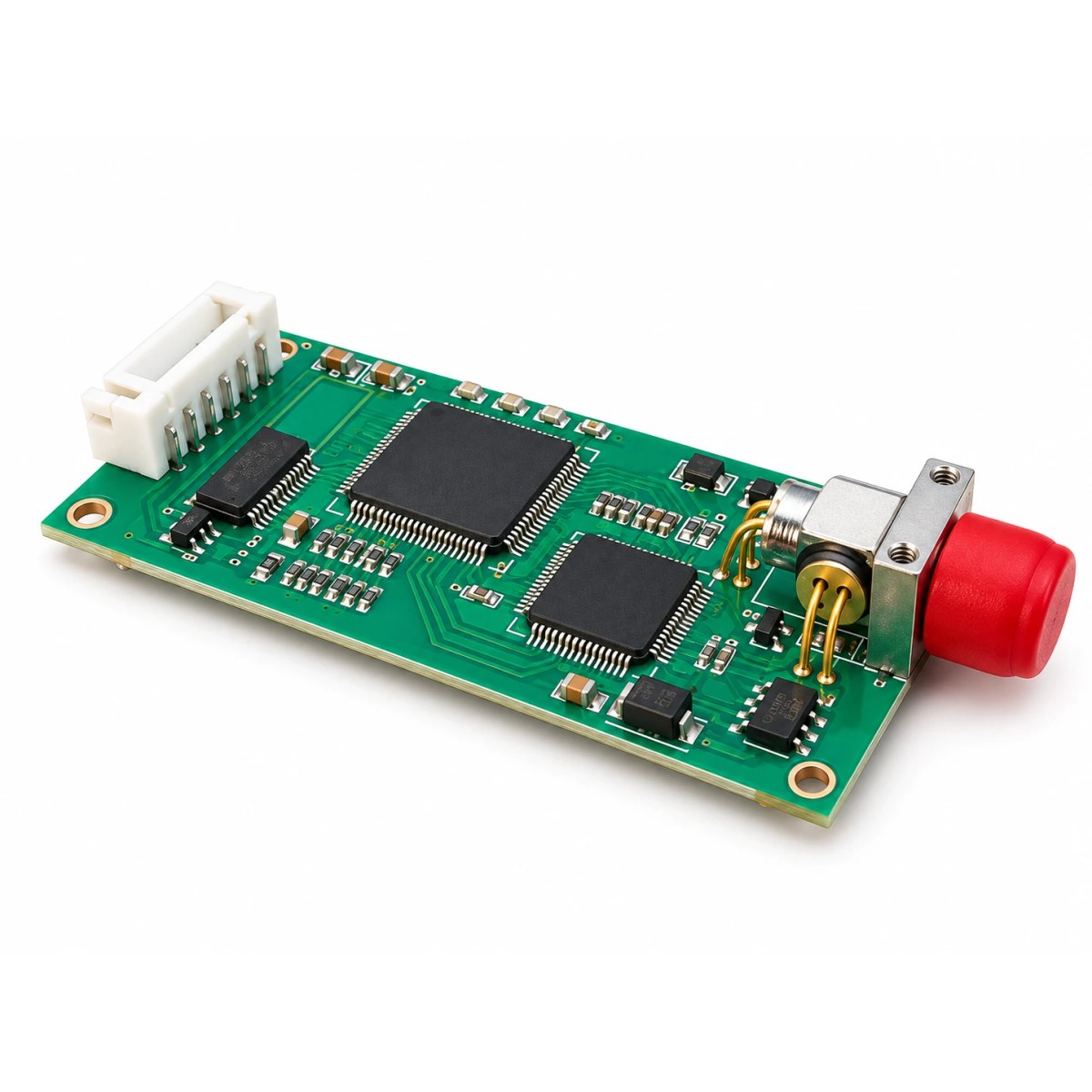
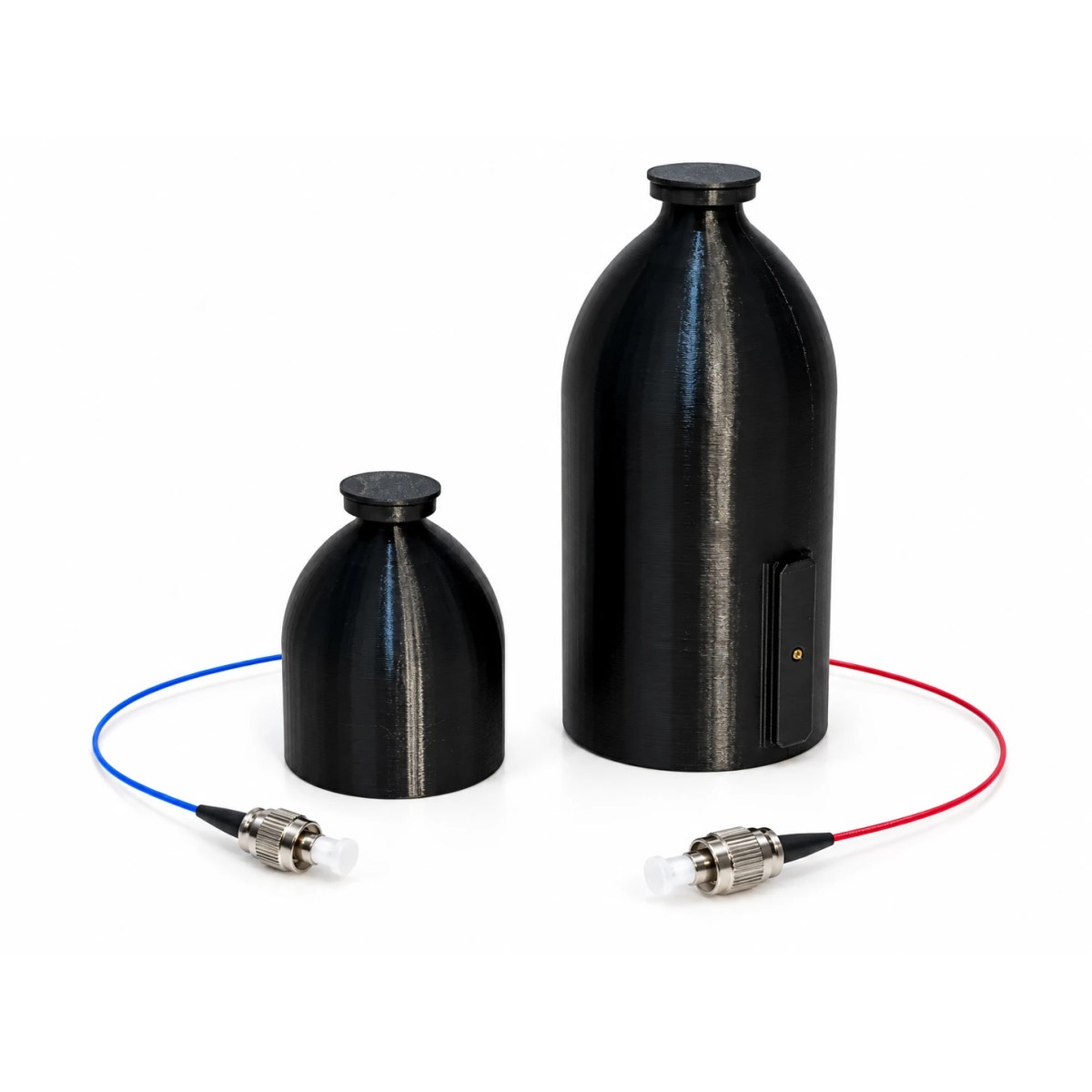
A spool of thin optical fiber sits on the drone. As the drone flies away the fiber unwinds behind it and stays connected to the ground station. Two converter modules turn your signals into light and back: one module on the drone (the TX side) and one on the ground (the RX side).
The fiber used for this is a bare 250 micrometre coated fiber, thinner than a hair with its coating, wound tightly on the spool.
What it is good at
- No radio link to jam or interfere with, and the link itself gives off no radio signal
- A clean picture that does not break up with distance, terrain or obstacles
- Low latency and high bandwidth, enough for an HD video feed
- Useful where radio links are unreliable or restricted
What to plan for
Range is set by the spool. When the fiber runs out, the flight is over, so choose the length for the route you will actually fly, with margin. A route is rarely a straight line, and altitude changes use fiber too.
Kilometres of fiber add weight, and a big spool adds bulk, so plan the frame, motors and battery around the payload. The fiber can snag, and a broken fiber cannot be recovered, so plan an open route. How fast and how aggressively you can fly is limited by the spool and the fiber's strength.
What you need to buy
You need three things that must fit together: a fiber spool of the right length, a TX and RX converter pair, and the right connector type on the fiber and on the converters. Buy the modules as a matched pair.
- Spool: choose the length from the distance you need, and keep it as short as the mission allows
- TX / RX modules: one on the drone, one on the ground, checked against your video system and ground station
- Connectors: FC or LC, matched between the spool and the modules
Connectors and care
FC is a threaded connector, LC a small push-pull one. Check which one your modules use. If the connectors are specified as PC, UPC or APC, match the polish on both ends, because mating different polishes damages the end faces.
Dust on a connector face costs signal. Keep connectors capped when they are not in use, clean them with a proper fiber cleaner, and avoid tight bends and kinks in the fiber.
Use fiber-optic equipment responsibly and within the regulations that apply to you.